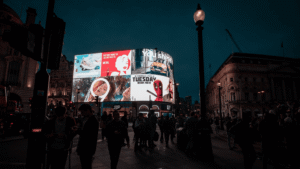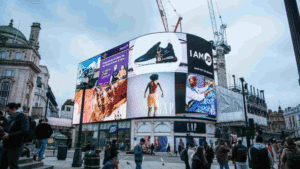
Street marketing, once limited to handing out flyers and one-off events, has evolved significantly to incorporate bolder and more unconventional approaches. From this transformation emerged the concept of “guerrilla marketing, ” a branch of street marketing distinguished by its often ephemeral nature, its surprising integration into the urban environment, and its ability to generate a viral impact. Wild marketing is characterized by its desire to think outside the box,to engage the public where they least expect it, using public space as a creative playground.
However, this freedom of marketing expression is now facing major challenges: environmental and social concerns. In the face of growing environmental awareness and a demand for ethical business practices, guerrilla marketing is being challenged to reinvent itself. How do these new forms of street marketing manage to incorporate the imperatives of environmental responsibility and social engagement? This is the question this article will attempt to answer by exploring the innovations, challenges, and future prospects of this rapidly evolving field.
The Emergence of New Forms of Guerrilla Marketing
The world of street marketing has seen the emergence of innovative techniques that make use of the urban environment in new and creative ways. These new approaches, which are often more subtle and integrated than traditional methods, aim to leave a lasting impression through their originality and contextual relevance.
Clean Tag (Reverse Graffiti): The Art of Selective Cleaning
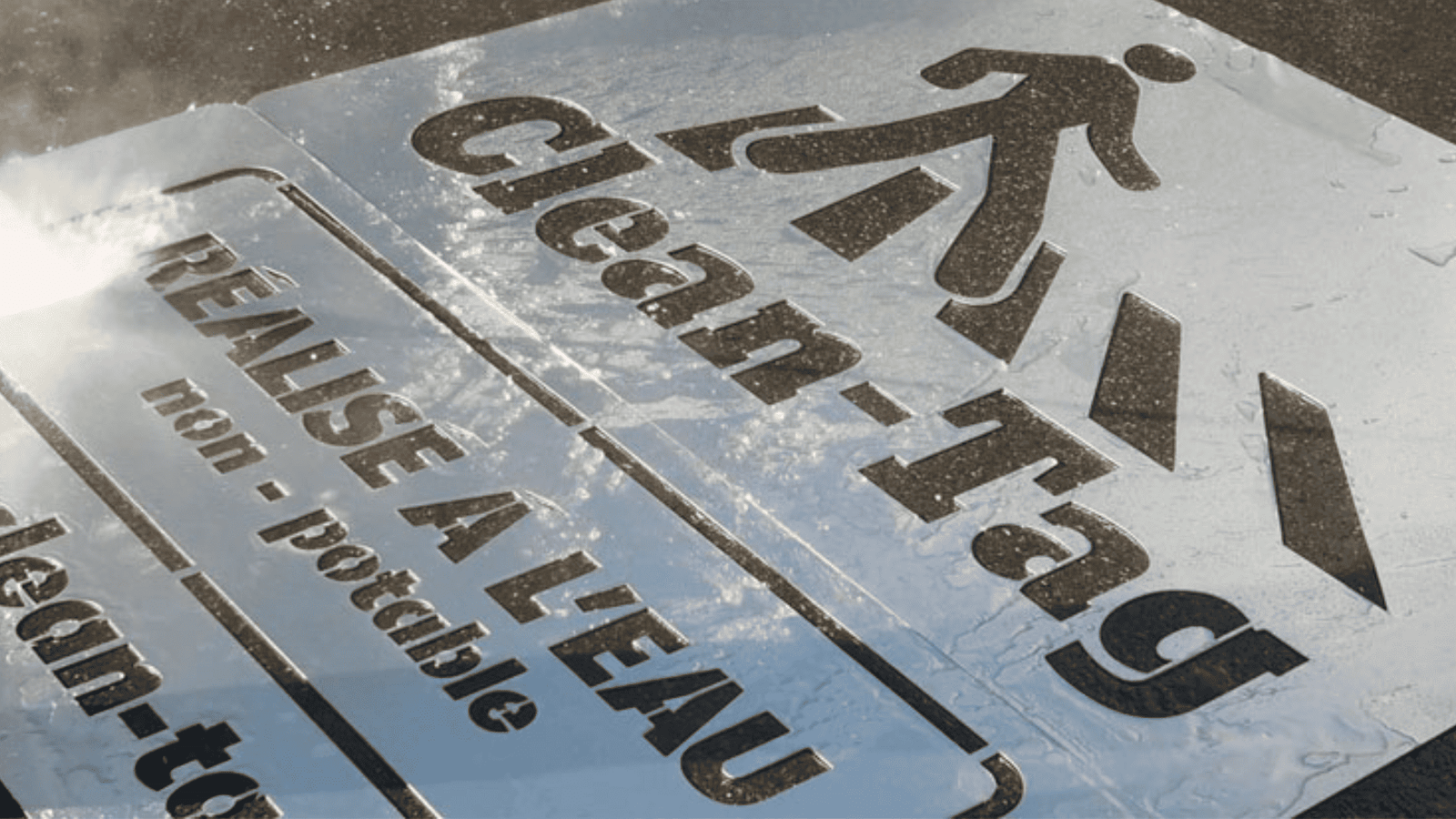
Clean tag, also known as reverse graffiti, is a fascinating approach to guerrilla marketing. Instead of adding material, it involves removing accumulated grime to reveal a message, logo, or design.
The technique is simple: using stencils andpressurized water (or sometimes brushes), these ephemeral artists reveal an image by selectively cleaning a specific area.
The visual impact of clean tags is often striking, using the existing environment as a canvas.
The perception is generally positive; they are seen as creative and akin to ephemeral urban art, far removed from vandalism. However, the issue of authorization and respect for public property remains a point of concern.
Check out the Clean Tag with 10STRICT right HERE
Stair Stickers: Verticality at the Service of Creativity
Stairs sticking uses vertical surfaces—particularly stair treads—as unique advertising spaces.
Durable, non-slip adhesive materials are applied to the risers or treads, creating eye-catching visuals.
This technique allows you to tell sequential stories, showcase products in unexpected ways, or create optical illusions.
It is particularly effective in terms of visibility and memorability.
Check out Stairs Sticking with 10STRICT right HERE
Other Innovative Formats: The Art of Urban Surprise
- Guerrilla gardening and plant-based marketing: Temporary planting initiatives in neglected urban spaces.
- Temporary art installations for promotional purposes: Sculptures, repurposed objects, and surprising displays.
- Creative reuse of urban elements: repurposing benches, covering trash cans, etc.
These formats leverage the element of surprise and their integration into the urban landscape to maximize their impact and spark conversation.
The Need for Environmental Responsibility in Unsanctioned Street Marketing
Reflections on the Environmental Impact of Traditional Practices
Traditional street marketing uses temporary materials that generate waste and sometimes contain pollutants.
It is increasingly coming under scrutiny for its environmental impact and intrusive nature.
The Ecological Potential of New Formats
- Clean tag: A“zero-waste”approach that promotes cleanliness.
- Stair Climbing: Durable and non-invasive materials.
- Plant-Based Marketing: Biodiversity, Air Quality, and Urban Aesthetics.
These new approaches promote more environmentally friendly street marketing.
Challenges and Limitations of Eco-Responsibility in Unregulated Marketing
- Material selection and life cycle.
- Responsible management of dismantling.
- Transparent communication to prevent greenwashing.
The Social and Ethical Aspects of Unregulated Street Marketing
Social and Community Engagement
Unsolicited marketing can:
- Supporting local causes,
- Raise awareness of social issues,
- Building social connections through interaction and curiosity.
Ethical and Legal Issues
- Respect for public and private property,
- Consent of local communities,
- Avoid shocking or dangerous actions.
A clear ethical framework is essential.
Public Perception and Social Acceptability
One action:
- Well-integrated and visually appealing → Success and positive word of mouth,
- Poorly designed or intrusive → Risk of damaging the brand.
Check outillegal posters and illegal stickers with 10STRICT
Conclusion
Unconventional marketing, in its new forms, represents a creative and bold evolution of street marketing.
Incorporating environmental and social concerns is becoming essential.
Techniques such as clean tagging, stairs sticking, and plant-based marketing offer promising avenues for more sustainable and environmentally friendly marketing.
However, challenges remain: the choice of materials, respect for the ephemeral nature of the medium, and the legal framework.
The future of guerrilla marketing will depend on accountability, transparency, and strong ethical standards.
When guided by regulations and sustainable initiatives, guerrilla marketing can become a form of urban communication that is impactful, creative, and respectful of both the environment and residents.