In an age where digital reigns supreme, a more direct and human form of communication is seeing a resurgence in popularity: street marketing. This bold and creative approach allows brands to step outside their virtual comfort zone and reach out to their audience where they actually are.
Why do street marketing in 2025?
The Strong Comeback of In-Person Communication
In an environment saturated with online advertising, physical interaction and real-world experiences offer a breath of fresh air. Street marketing allows you to create a tangible connection with consumers, leaving a memorable impression that is far more powerful than a simple banner ad.
Emotional impact and virality
A successful street marketing campaign has the power to surprise, entertain, and even move the public. This emotional element encourages word-of-mouth and sharing on social media, significantly expanding the campaign’s reach. The “wow” factor it generates can lead to organic virality, which is invaluable to the brand.
What is street marketing?
Definition
Street marketing encompasses a range of communication and promotional techniques carried out in public spaces. Its primary goal is to directly engage consumers in their everyday environment, often using unconventional and surprising methods.
Goals and Challenges for Brands
Street marketing has many objectives:
- Build brand awareness in a powerful and memorable way.
- Build engagement by fostering interaction and evoking emotion.
- Boost sales through sample giveaways or targeted promotional offers.
- Enhance the brand image by promoting values of creativity and community engagement.
- Collect data and direct feedback from consumers.
The challenge for brands is to stand out in a crowded advertising landscape, connect with their audience, and create a lasting impact.
Differences from traditional marketing
Unlike traditional marketing, which relies on mass media channels that are often one-way (TV, radio, print media), street marketing emphasizes direct interaction, surprise, and personalization. It leverages creativity and agility to capture the attention of an audience that is often bombarded with messages but rarely engaged in such a direct way.
The main types of street marketing
"Traditional" street marketing
This approach is based on simple yet effective steps:
- Distributing flyers and samples: A direct way to introduce people to a product or offer.
- Mascots and brand ambassadors: Create a fun and memorable experience.
- Street entertainment: Shows, contests, and artistic performances to attract attention.
Unauthorized street marketing
This form of street marketing uses public spaces as a medium for creative expression:
- Illegal posting: Posters placed outside of designated advertising spaces (often illegal and risky).
- Stencils: Messages or logos painted directly onto street furniture or sidewalks.
- Stickers: Stickers placed in strategic locations.
It is important to note that these practices are often subject to strict regulations and may result in penalties.
Guerrilla marketing
Guerrilla marketing stands out for its boldness and originality. It aims to create maximum impact on a often limited budget by using surprising and unconventional tactics. The goal is to generate media buzz and significant word-of-mouth through the element of surprise and the unexpected nature of the campaign.
Event Marketing
This category covers the organization of one-time events in public spaces to promote a brand or product. This may include:
- Temporary art installations: Creating a memorable visual experience.
- Live performances: Shows, concerts, demonstrations.
- Immersive experiences: Immersing the audience in the brand’s world.
OOH (Out-of-Home): Traditional Outdoor Advertising
Definition and formats
OOH refers to advertising outside the home. Its traditional formats include:
- Bus shelters: Advertising panels integrated into bus stops.
- Billboards: Fixed structures in various sizes (A4, A3, A2, A1, A0, 2 m², 4 m², 8 m², 12 m²).
- Street furniture: advertising columns, advertising benches, etc.
Pros and cons
Out-of-home advertising offers broad visibility and message repetition, reaching a diverse audience. However, it may lack precise targeting, and interaction with the audience is limited.
Discover OOH advertising with 10STRICT right HERE
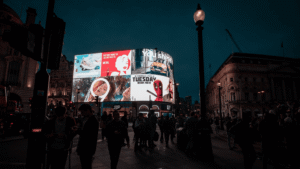
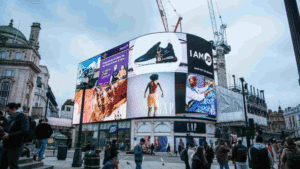
DOOH (Digital Out-of-Home): the connected version of OOH
Definition
DOOH is the digital evolution of OOH. It uses digital screens, interactive kiosks, and digital signage to display advertising messages.
Integration of sensors, data, and geolocation
DOOH offers more precise targeting capabilities through the integration of sensors (facial recognition, people counting), data (weather, traffic), and geolocation. This allows messages to be tailored in real time to the audience present.
Notable examples of DOOH campaigns
Interactive DOOH campaigns that let passersby play games, ads that adapt to the weather, and messages tailored to the time of day are examples of how effective this format is.
Discover digital out-of-home (DOOH) advertising with 10STRICT right HERE
Inspiring examples of successful campaigns
Major brands
- Coca-Cola: Fun sampling campaigns and interactive installations in public spaces.
- Nike: Urban sports activations, interactive challenges.
- Burger King: A bold guerrilla marketing campaign targeting its competitors.


SMEs/startups
Many small and medium-sized businesses and startups have successfully generated buzz through original, low-cost street marketing campaigns, leveraging creativity and a close connection with their local audience. Unexpected flash mobs, urban scavenger hunts, and interactive art installations can generate significant media attention.
Regulations and Best Practices
What is allowed / prohibited
It is crucial to familiarize yourself with local regulations regarding the use of public spaces, flyer distribution, posting of signs, and noise pollution. Certain activities, such as unauthorized posting, are generally prohibited and subject to penalties.
Permit applications at City Hall
For many street marketing campaigns, particularly those that involve significant use of public space or the installation of structures, a permit must be obtained from the city hall.
Ethics, Responsibility, and Respect for the Public Sphere
Street marketing must be conducted in a manner that respects the environment and the public. It is important to keep the area clean, avoid obstructing traffic, and adopt an ethical and responsible approach.
Conclusion: The Future of Street Marketing in the Digital and Local Era
Far from being obsolete, street marketing is experiencing a true renaissance by adapting to new technologies and consumer expectations. The integration of digital technology (interactive DOOH, use of social media to amplify street campaigns) and the growing importance of the local context offer unique opportunities for brands to create memorable experiences and forge authentic connections with their audience. In an increasingly virtual world, the human touch and real-world experience offered by street marketing remain powerful assets for impactful and effective communication.