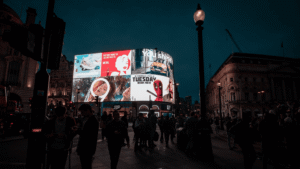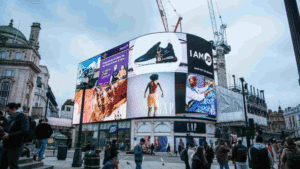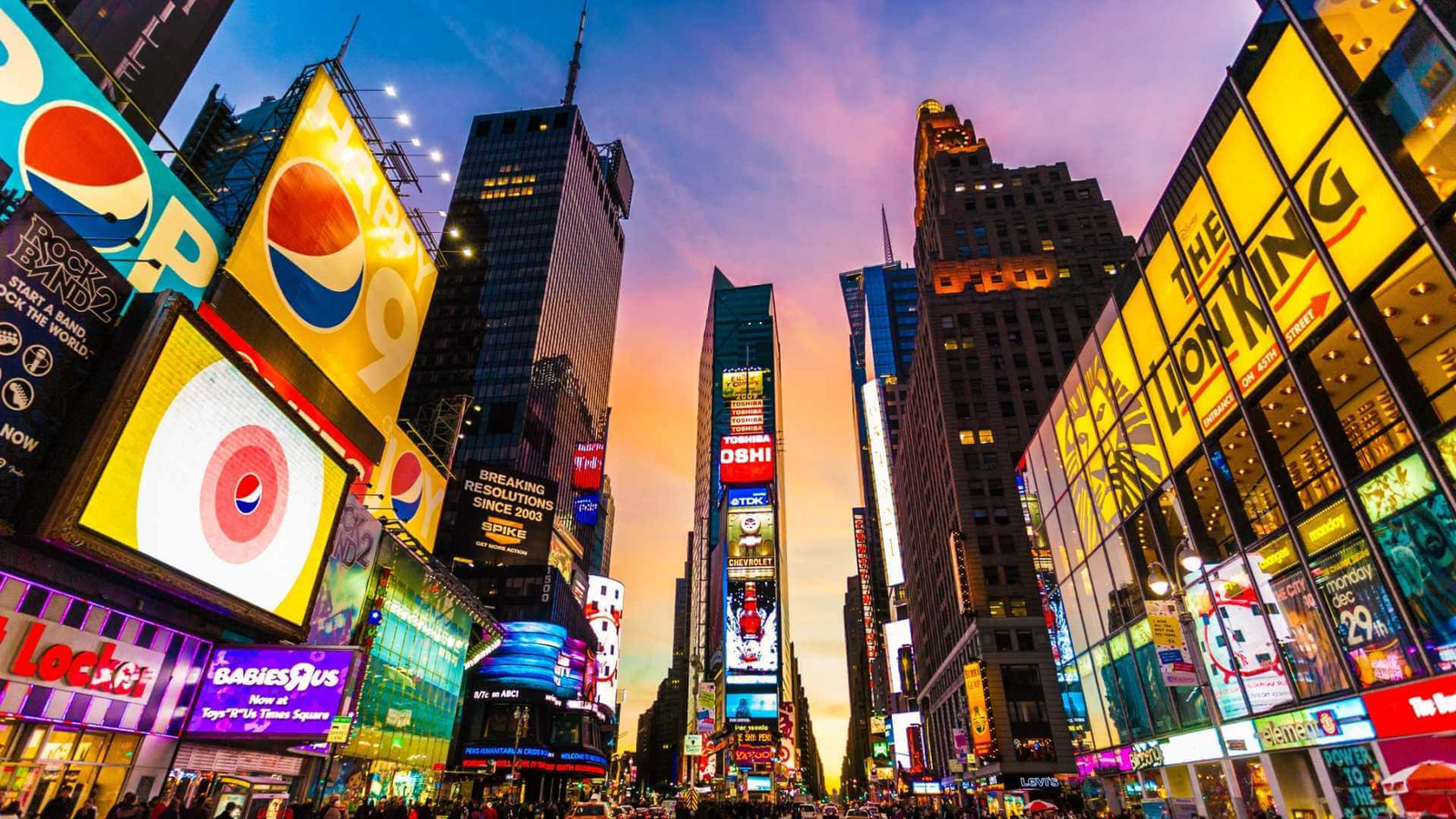
Why is OOH advertising still so powerful?
In an ever-changing media landscape, Out-of-Home (OOH) advertising continues to prove its relevance and effectiveness. Far from being a relic of the past, it is reinventing itself and leveraging technological advances to offer brands unparalleled visibility and a tangible impact in public spaces.
Visibility, repetition, and integration into the public sphere
The primary strength of OOH lies in its ability to reach a wide audience on a daily basis, as people go about their daily lives and routines. Whether it’s an imposing 4×3 billboard, an ad in a busy bus shelter, or a digital screen in a train station, OOH advertising blends into the urban landscape and naturally becomes part of consumers’ daily lives. This constant presence helps ensure the message is remembered and strengthens brand awareness.
The Resurgence of Physical Media in the Digital Age
Paradoxically, the ubiquity of digital media has reignited interest in physical media. Amid a constant stream of online information, a well-placed and creative OOH ad can stand out and capture the attention of an audience that is sometimes overwhelmed by screens. It offers a visual break and a connection to the real world, reinforcing the impact of the message.
What is Out-of-Home (OOH) Advertising?
Definition
Out-of-Home (OOH) advertising, or outdoor advertising, encompasses all forms of advertising that reach consumers when they are away from home. This includes a wide range of media, from traditional billboards to interactive digital screens, as well as vehicle wraps and signage in transportation hubs.
Marketing Objectives
Out-of-home (OOH) advertising serves various marketing objectives, including:
- Increase brand awareness among a broad audience.
- Generate visibility for specific products or services.
- Support advertising campaigns on other channels (TV, radio, digital).
- Drive traffic to physical retail locations (drive-to-store).
- Strengthen the brand image through impactful designs.
- Target specific audiences based on their location and travel patterns.
Differences Between OOH, Street Marketing, and DOOH
It is important to distinguish OOH from street marketing and DOOH:
- OOH: Focuses on advertising displays on fixed or mobile media in public spaces. Its primary goal is visibility and repetition.
- Street Marketing: Uses creative and often unconventional communication techniques in public spaces to interact directly with consumers (distributing flyers, promotional events, guerrilla marketing). The focus is on interaction and engagement.
- DOOH (Digital Out-of-Home): This is the digital version of OOH. It uses digital screens to display dynamic and interactive advertising messages. It offers more advanced targeting and measurement capabilities than traditional OOH.
Large-Format Out-of-Home (OOH) Advertising Displays
Static outdoor advertising
These are the traditional, fixed formats found in cities:
- 4×3 billboards: Large-format signs offering maximum visibility along major roads and in high-traffic areas.
- Bus shelters: Advertising integrated into bus stops, reaching public transit riders and passersby.
- Morris columns: Iconic cylindrical structures, often found in city centers.
- Lollipop signs: Smaller advertising signs placed on sidewalks and in pedestrian zones.
Discover OOH advertising with 10STRICT right HERE
Mobile Display (Mobility)
This category covers advertising on moving vehicles:
- Advertising on buses and trams: Partial or full vehicle wraps, offering extensive visibility in urban areas.
- Advertising on taxis: Illuminated signs on the roof or door wraps, targeting urban and tourist areas.
- Advertising trucks: Vehicles specially equipped to display advertising messages at events or along specific routes.
- Branded Vehicle Fleets: Using company vehicles as permanent advertising media.
Discover the mobility advertising network with 10STRICT right HERE
Public Transportation Signage
This refers to advertisements found in public transportation facilities:
- Subway: Posters in the hallways, on the platforms, and inside the trains.
- Train Stations: Display boards, screens, and signage in the concourses and on the platforms.
- Airports: Advertising in terminals, waiting areas, and on luggage carts, targeting travelers.
- Signage: Directional and informational signs that incorporate advertising messages.
- Screens: Display of video and animated ads in waiting areas and high-traffic areas.
DOOH (Digital Out-of-Home): The Digital Evolution
Definition of DOOH
Digital Out-of-Home (DOOH) is a form of outdoor advertising that uses digital screens to display dynamic and interactive advertising content. It offers greater flexibility and targeting capabilities than traditional static billboards.
Discover digital out-of-home (DOOH) advertising with 10STRICT right HERE
Types of Media
DOOH comes in various formats:
- Digital Displays: LED panels of various sizes, located in high-traffic areas (shopping streets, shopping malls, train stations).
- Interactive kiosks: Touchscreens that allow users to interact with advertisements and obtain additional information.
- Connected Storefronts: Transforming storefronts into interactive advertising screens.
Geolocation, dynamic targeting, and data
DOOH enables more precise targeting through:
- Geolocation: Displaying relevant messages based on the screen's location and the location of passersby.
- Dynamic targeting: Adapting advertising content in real time based on contextual data (weather, traffic, events).
- Data: Use of (anonymized) audience data to deliver more relevant ads.
Advantages Over Traditional Displays
DOOH offers several advantages over static OOH advertising:
- Flexibility: Ability to post multiple messages and update them quickly.
- Engaging: Using videos, animations, and interactive content to capture attention.
- Targeting: Tailoring the message to the context and audience.
- Metrics: Ability to track campaign performance (impressions, interactions).
OOH and DOOH: What Are the Benefits for Brands?
Wide reach and visual impact
OOH and DOOH make it possible to reach a wide audience, including people who are not exposed to traditional media or online ads. Large-scale formats and visually striking creative designs capture attention and leave a lasting impression.
Adaptability of the message
DOOH offers great flexibility for tailoring the message based on the time of day, the weather, local events, or audience data. Traditional OOH can also be adapted through creative and context-sensitive campaigns.
The perfect complement to an omnichannel strategy
OOH and DOOH fit seamlessly into a multichannel marketing strategy. They can complement online campaigns by boosting brand awareness in the physical world and encouraging consumers to take action (QR codes, social media mentions).
Examples of Memorable OOH/DOOH Campaigns
National and international brands
Many major brands have launched memorable OOH and DOOH campaigns that leverage creativity, interactivity, and integration with digital media. From spectacular installations in iconic locations to DOOH screens displaying personalized messages, the possibilities are endless.
Creative Campaigns in Transit and Mobility Advertising
Bus and tram wraps featuring original designs, immersive ads in subway stations, and interactive screens in airports are all examples of creative OOH campaigns that capture travelers’ attention.
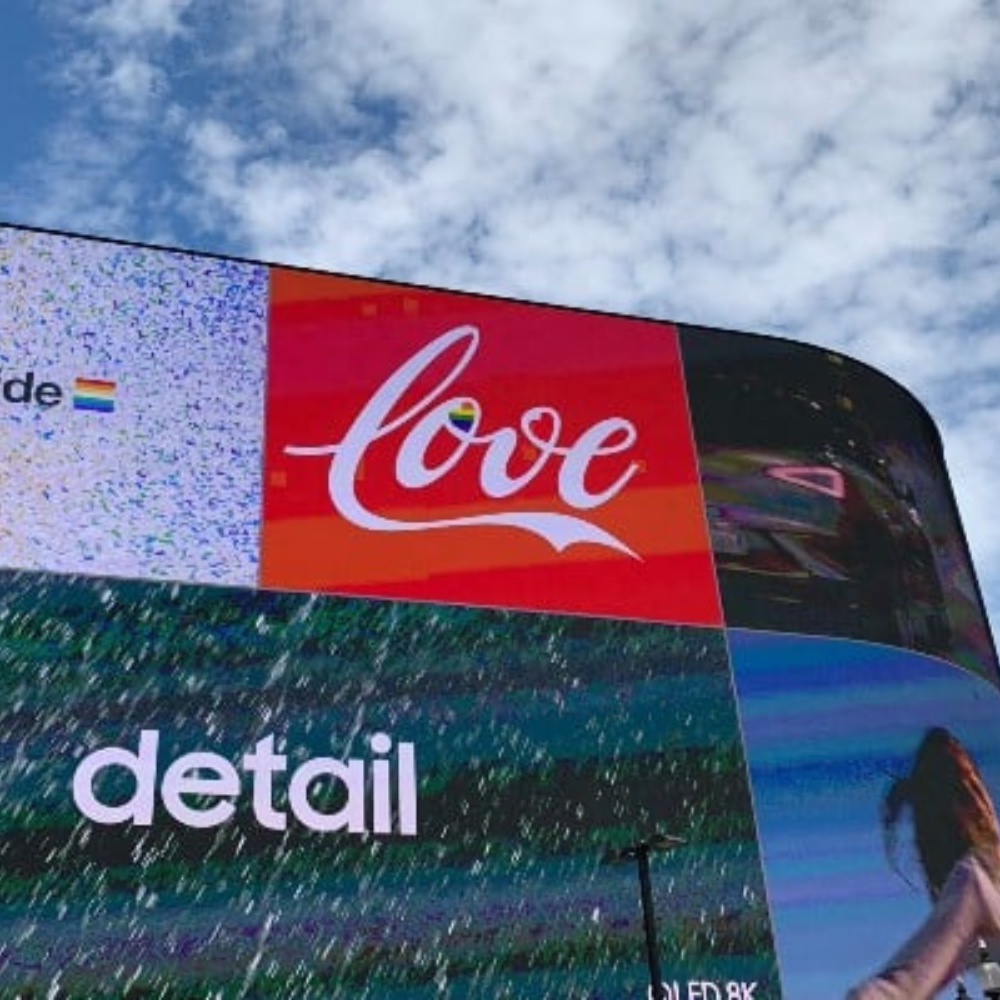
You Might Be Interested In: Top 5 Most Innovative DOOH Campaigns
Integration with digital channels (QR codes, drive-to-store campaigns)
Incorporating QR codes into OOH media helps bridge the gap between the physical and digital worlds by directing consumers to websites, special offers, or additional information. “Drive-to-store” campaigns use OOH to encourage passersby to visit a nearby physical retail location.
Rates, Placements, and Advertising Agencies
How Does OOH/DOOH Media Buying Work?
OOH and DOOH advertising space is typically purchased through specialized advertising agencies. The cost varies depending on several factors, including location, the size of the media, the duration of the campaign, and foot or vehicle traffic.
Discover the advertising agency 10STRICT
Selection criteria: location, duration, pedestrian/vehicle traffic
Choosing the right location is crucial to maximizing the impact of an OOH campaign. It is important to select strategic locations where the target audience is present and where there is heavy foot or vehicle traffic. The duration of the campaign depends on the marketing objectives and the available budget.
Market players: JCDecaux, Clear Channel, Médiatransports…
The OOH and DOOH advertising market is dominated by major players such as JCDecaux, Clear Channel, and Médiatransports, which offer a wide range of advertising media and solutions. There are also advertising agencies that specialize in certain types of media or specific geographic areas.
The Future of OOH and DOOH in France
New Technologies (AI, Facial Recognition, NFC)
The integration of new technologies such as artificial intelligence (AI), facial recognition (with respect for privacy), and near-field communication (NFC) opens up new possibilities for OOH and DOOH, enabling more personalized interactions and more accurate audience measurement.
Programmatic Advertising on OOH Screens
Programmatic advertising, already well established in the digital space, is making its debut on DOOH screens. It allows advertisersto purchase and deliver ad space in an automated and targeted manner, based on audience and contextual criteria.
Sustainability and Eco-Friendly Formats
Sustainability is becoming an increasing concern in the out-of-home (OOH) advertising sector. Advertising agencies are developing more environmentally friendly formats , using recycled materials, and optimizing the energy consumption of digital screens.
Comparison: Street Marketing, OOH, and DOOH – When to Use Which?
The choice between these approaches depends on the brand's objectives, budget, and target audience.
| Feature | Street Marketing | OOH (Traditional) | DOOH (Digital Out-of-Home) |
|---|---|---|---|
| Objectives | Brand awareness, engagement, buzz, direct interaction | Wide visibility, repetition | Targeting, flexibility, potential for interactivity |
| Budget | Variable (may be low for guerrilla warfare) | Generally higher | Often higher than traditional OOH |
| Target Audience | Precise geographic and contextual targeting | Broad and undifferentiated | Contextual and behavioral targeting available |
| Interaction | Strong, direct | Weak, passive | Potentially high (interactive kiosks) |
| Creativity/Impact | Very high | Moderate | High (animations, interactivity) |
| Measuring Results | More complex (qualitative) | Scope, impressions | Impressions, clicks, interactions (if interactive) |
Conclusion: Why Should You Include OOH in Your Multichannel Marketing Strategy?
Out-of-Home (OOH) advertising, whether traditional or digital, remains a powerful and relevant tool in a multichannel marketing strategy. Its ability to reach a wide audience, its visual impact, its growing flexibility thanks to Digital Out-of-Home (DOOH), and its natural integration into consumers’ everyday environments make it an essential medium for building brand awareness, supporting campaigns, and driving traffic. By reinventing itself with new technologies and adapting to sustainability challenges, OOH is more than ever a key ally for brands that want to make a lasting impression and connect with their audience in the real world.